Crate Training a American Bully and Preventing Separation Anxiety
General training information. Every dog is an individual; for health or behavior concerns, see your veterinarian.
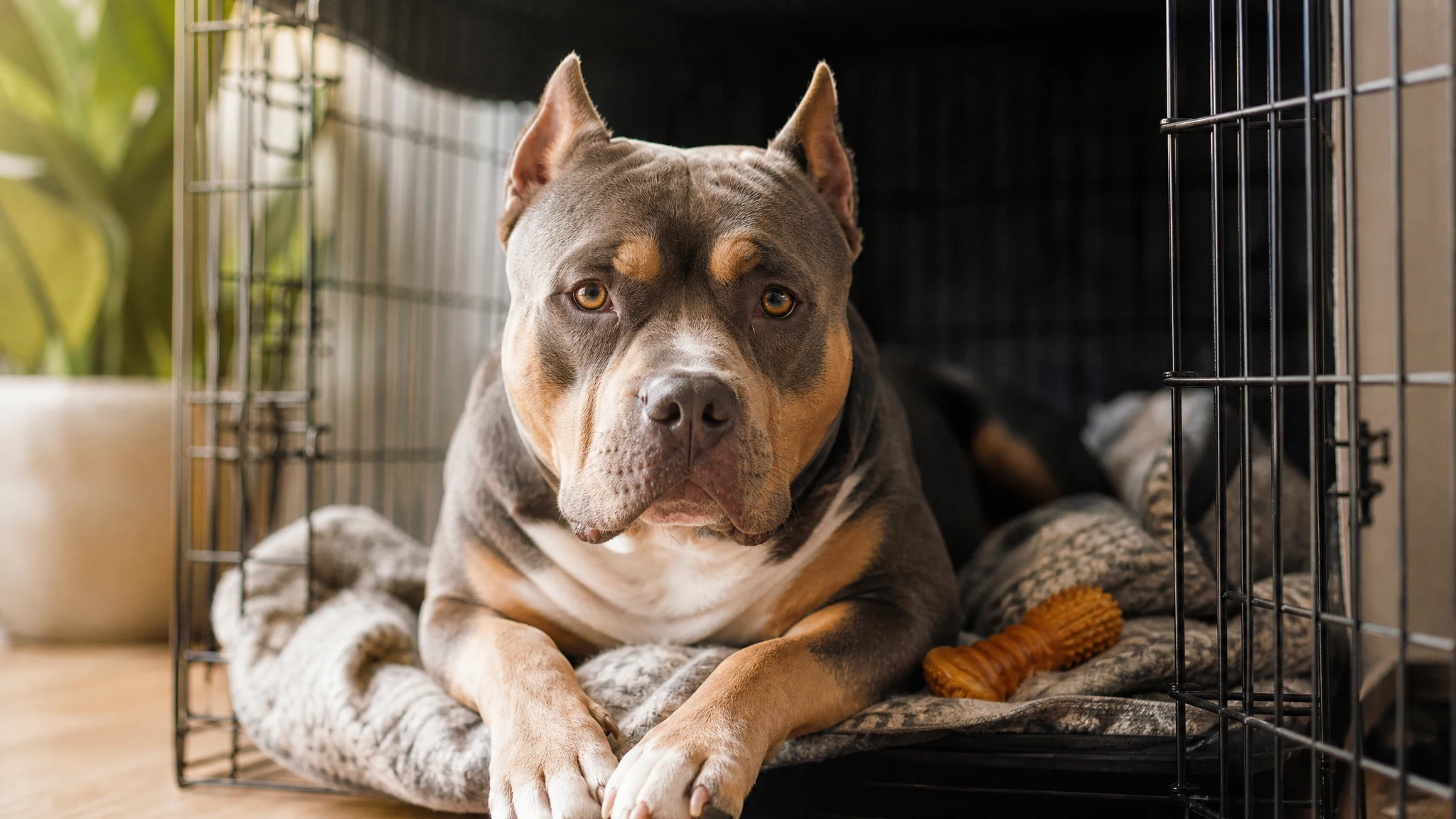
American Bully crate training is one of the most useful skills you can build in the first few months. A crate gives your dog a quiet place to rest. It also keeps a strong, curious young dog safe when you cannot watch every move.
The United Kennel Club (UKC) breed standard describes a gentle and friendly dog, and the American Bully Kennel Club (ABKC) standard calls the breed confident and willing to please. Those are good starting points for training. Still, individual dogs vary, and some will take to a crate in days while others need weeks.
This guide covers crate size, how to introduce the crate, how to build alone time in small steps, and what signs of separation distress look like. It also covers when to call your veterinarian.
Why a Crate Helps an American Bully
Petful's American Bully guide lists physical strength, even in friendly play, as one of the breed's known challenges. A young Bully who is bored and loose in the house can chew, bounce off furniture or get into things that hurt him. A crate gives him a safe default spot.
A crate is not a punishment room. It is a bedroom. The goal is a dog who walks in on his own and settles, because good things happen there.
Crate training also supports separation anxiety prevention. A dog who learns early that quiet time alone is normal and predictable is less likely to panic when you leave. It is not a guarantee, but it stacks the odds in your favor.
Materials You Need
- A sturdy crate. Choose one with a secure latch. A strong dog can work at a weak door. Wire and heavy-duty plastic crates both work; pick what suits your home.
- A divider panel if you are buying one crate to fit a growing puppy.
- A firm, washable bed or mat that is hard to shred.
- Small, soft treats cut into pea-sized pieces.
- Safe chew items chosen for your dog's size and chewing style, such as a stuffable rubber toy.
- A light cover for part of the crate, if your dog likes a den feel.
- A measuring tape for sizing.
- A treat pouch or small bowl so rewards are always close.
Step 1: Pick the Right Crate Size
Size is where American Bully owners most often get stuck, because the breed comes in several size varieties. The UKC recognizes Pocket, Standard/Classic and XL. The ABKC lists Pocket, Standard, Classic and XL.
The UKC standard gives heights at the withers. Pocket males are under 17 inches (and at least 14) and females under 16 inches (at least 13). Standard/Classic males are 17 to 20 inches and females 16 to 19 inches. XL males are over 20 up to 23 inches, and XL females are over 19 up to 22 inches. The ABKC gives the same Standard range of 17 to 20 inches for males and 16 to 19 inches for females.
Weight is less helpful. The ABKC standard says there is no particular weight for the breed. Two dogs of the same height can differ a lot in build, so do not buy a crate by weight alone.
Measure your own dog instead:
- Measure height at the withers (the top of the shoulders) while he stands.
- Measure from the tip of his nose to the base of his tail.
- Choose a crate where he can stand without ducking, turn around easily and stretch out lying down.
- Do not go much bigger than that. Too much room makes it easier for a puppy to use one end as a toilet.
For a puppy, check with your veterinarian or the breeder about how large he is likely to grow. Petful notes that puppies expected to become large adults may need a large-size growth diet, so growth varies. A crate with a divider lets you resize as he grows rather than buying several crates.
Step 2: Make the Crate a Great Place
Set the crate in a spot where the family spends time, such as the living room. Isolation in a back room can make the crate feel like exile.
- Leave the door open or take it off the frame at first.
- Put the mat inside and toss a few treats in. Let your dog walk in and out freely.
- Praise calmly when he steps in. Do not push or lift him in.
- Feed some meals in the crate, starting near the door and moving toward the back as he gets comfortable.
- Offer a stuffed chew toy in the crate and let him enjoy it with the door open.
Spend a few short sessions a day on this. Most dogs need several days of door-open time before you close anything.
Step 3: Close the Door for Short Periods
Once your dog walks in readily, begin closing the door for a few seconds while he eats a treat or chews a toy.
- Ask him in, reward, and close the door while you sit beside the crate.
- Open the door before he gets restless. Count to five, then ten, then thirty.
- Slowly extend to a few minutes, then stand up, walk a step away and return.
- Build until he can rest quietly for ten to fifteen minutes with you in the room.
Vary the length. If every session grows longer in a straight line, he may start to predict it and fuss when the pattern breaks. Mix easy short ones in with the longer ones.
If he whines, do not open the door at the moment of loudest noise. Wait for a brief pause, even two seconds, then reward and open. Going back a step is fine. It is feedback, not failure.
Step 4: Build Alone Time Gradually
This is the heart of preventing separation anxiety. The aim is to teach that you leaving is boring and that you always come back.
- Move around the room. Leave the crate door closed with a chew inside while you read or work nearby.
- Step out of sight. Walk into another room for a few seconds and return calmly, without a big greeting.
- Add distance and time. Go to another floor, take out the trash, or step outside for a minute.
- Practice real departures. Pick up your keys, put on shoes, then sit back down. Doing this often takes the drama out of those cues.
- Leave for short outings. Start with a few minutes and add time only as long as he stays relaxed.
Before each longer crate session, give him a chance to move. Petful suggests daily movement, sniffing, training and play, with two or more moderate walks at cooler times of day. PetsRadar says around an hour daily. A dog who has stretched his legs and used his nose is more likely to settle.
Keep arrivals and departures low key. A quiet hello after he calms down teaches more than an excited reunion.
Keep the Crate Comfortable and Safe
Petful warns that the compact, muscular build of the American Bully can struggle in heat. Keep the crate out of direct sun and away from heaters. Make sure the room stays cool and has good airflow, and never leave a dog in a closed car or a stuffy space.
Remove collars and anything that could snag in the crate. Check chews and toys for damage and replace them when they wear down. Give a potty break before crating, and do not ask a young puppy to hold it longer than he can manage. Ask your veterinarian how long is reasonable for your puppy's age.
Tips for Success
- Reward calm, not noise. Treat the quiet moments so he learns that settling pays.
- Teach a mat settle. Petful's training notes list mat settling among the first skills to teach. The skill carries right into the crate.
- Set up the environment. Petful's guidance is to reward desired behavior and arrange things so unwanted behavior does not get practiced. A closed gate and a stuffed chew do more than scolding.
- Keep sessions short and happy. End before he gets frustrated.
- Be consistent. Everyone in the home should use the same cues and rules.
- Use humane methods only. The American Veterinary Society of Animal Behavior (AVSAB) supports reward-based training. Avoid shock, prong or choke collars, alpha rolls, scruffing and dominance tactics. They can raise fear and make anxiety worse.
Common Mistakes to Avoid
- Using the crate as punishment. If he links it with being in trouble, he will resist going in.
- Going too fast. Jumping from five minutes to four hours is the usual path to panic.
- Leaving a dog crated all day. A crate is for rest and short management, not for long stretches in place of exercise and company.
- Letting him out only when he cries. This can teach him that noise opens the door.
- Making goodbyes dramatic. Long, emotional farewells can wind a sensitive dog up.
- Skipping exercise. A dog with pent-up energy finds it harder to relax.
- Overfeeding crate treats. Petful lists overfeeding of bulky-looking adults as a challenge. Count training treats as part of the day's food.
- Buying a crate that is too weak. A strong dog may bend or break a flimsy door, and an escape attempt can cause injury.
Signs of Separation Distress
Some fussing in the early days is normal. Distress that is intense or does not ease with gradual practice is different. Watch for these signs when you leave:
- Nonstop barking, howling or whining that does not settle
- Frantic scratching or chewing at the crate door, doorframes or windows
- Drooling or panting heavily when you are not hot or exercising
- Pacing or inability to settle, even with a favorite chew
- Refusing food or treats when alone, though he eats happily when you are home
- Toileting indoors in a dog who is otherwise house trained
- Following you from room to room and showing stress as you prepare to leave
A video camera or phone left recording can show you what happens after you go. Many dogs seem fine once the door shuts, and knowing that is useful.
When to See a Veterinarian
Call your veterinarian if your dog shows signs of real distress, hurts himself in the crate, or loses interest in food. Also call if changes in toileting or behavior come on suddenly. Pain, illness and other medical problems can look like anxiety, and only a veterinarian can sort that out.
Do not try to diagnose or treat anxiety at home with supplements or medication. Ask your veterinarian about next steps, and about a referral to a veterinary behaviorist or a qualified reward-based trainer if needed.
Also mention any skin issues. Petful lists odor, redness, hair loss, greasy skin, recurrent ear debris and persistent licking as signs worth a vet visit. Itchy, uncomfortable dogs can have a harder time settling in a crate.
What Results to Expect
With patient, steady practice, many American Bullies learn to go into the crate on their own and rest there within a few weeks. Young puppies and dogs with a history of stress may need longer.
Progress is rarely a straight line. A busy week, a move or a change in schedule can set things back. Return to an earlier step, keep sessions easy, and build again. Gradual alone-time practice may lower the chance of separation distress, though no method works for every dog.
If you are not seeing progress after consistent work, that is a good time to check in with your veterinarian or a reward-based behavior professional.
Quick Recap
- Measure your dog and pick a crate he can stand, turn and stretch out in.
- Make the crate a happy place with treats, meals and a chew.
- Close the door for short, easy periods while you stay near.
- Build alone time in small steps, with exercise first.
- Watch for signs of real distress and talk to your veterinarian early.