How to Potty Train a American Bully Puppy
General training information. Every dog is an individual; for health or behavior concerns, see your veterinarian.
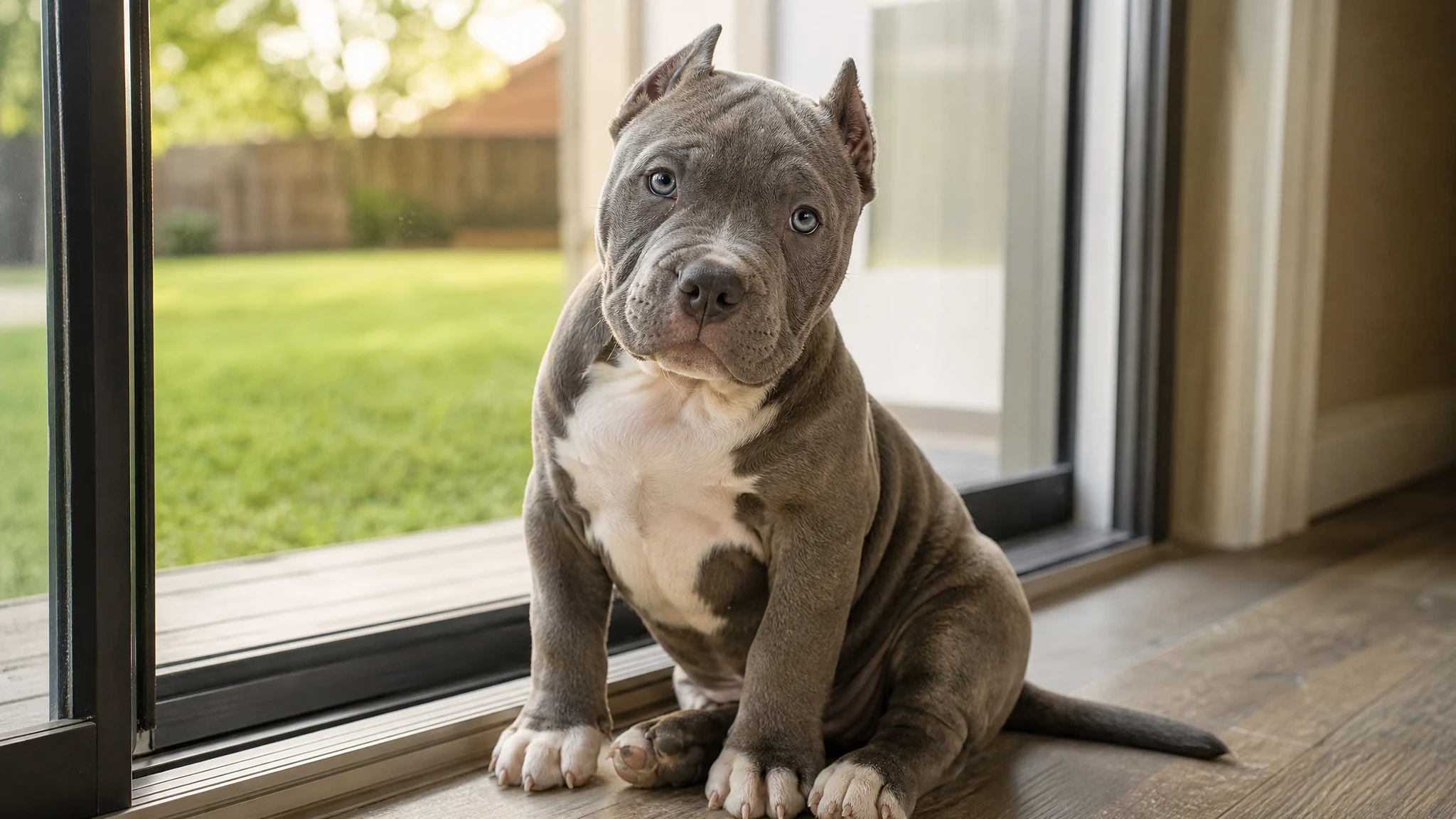
A new American Bully puppy is a lot of dog in a small, wiggly package. The cute stage passes fast. The habits you set in the first weeks tend to stay with the dog for years.
This guide covers how to potty train a American Bully with a simple schedule, a crate, and calm responses to mistakes. It is built around reward-based training, which is the approach the American Veterinary Society of Animal Behavior (AVSAB) supports. No scolding, no rubbing noses in messes, no tricks that scare the dog.
What the breed sources say that matters here
The United Kennel Club (UKC) breed standard describes the American Bully as a companion dog. The American Bully Kennel Club (ABKC) standard describes a confident, willing-to-please dog with a gentle and friendly nature. A dog that wants to work with you is a good starting point for house training.
Individual puppies still vary. Some are easygoing. Some are distracted by everything. Plan for your puppy, not for a description.
Size is the other point worth knowing. The UKC recognizes Pocket, Standard/Classic and XL varieties. By the UKC standard, Standard/Classic males measure 17 to 20 inches at the withers and females 16 to 19 inches. Pocket dogs are smaller and XL dogs are taller. The ABKC says it sets no particular weight.
None of those sources gives bladder capacity, or says how stubborn or sensitive the breed is when learning to potty outside. If you need that detail, ask your breeder, your veterinarian or the registry. Do not assume your puppy will learn faster or slower than any other.
Materials you need
- A crate that fits your puppy now, with a divider if it is meant to fit an adult. Choose a size where the puppy can stand, turn around and lie down, and not much more. Check the size against the variety your puppy is expected to grow into.
- A 6-foot leash and a flat collar or harness. Keep this for potty trips so the puppy links it with going outside.
- Small, soft treats. Pea-sized pieces work. Count them toward the day's food so the puppy does not gain extra weight. The Petful American Bully guide warns about overfeeding bulky-looking adults, and the habit starts in puppyhood.
- An enzyme-based cleaner made for pet accidents. It breaks down odor that makes a puppy want to go in the same spot again.
- A chosen potty spot outside, in a place you can reach quickly.
- A notebook or phone note to log meals, naps, and potty trips for the first week or two.
- A baby gate or exercise pen to keep the puppy in the room you are in.
- An umbrella or rain jacket for you. Weather will not pause for training.
Step-by-step: house training an American Bully
Step 1: Pick the spot and a cue word
Choose one spot outside. Always walk the puppy there on leash, even if you have a fenced yard. Stand still and be boring. Say a short cue such as "go potty" once or twice, quietly.
Repeat the same word every time. Over a few weeks, the puppy learns that the word means what is coming next.
Step 2: Build a schedule around the puppy's body
Puppies need to go at predictable moments. Take the puppy out:
- First thing after waking, in the morning and after every nap
- Right after eating or drinking
- After play sessions or excited greetings
- Before crating and before bed
- Every hour or two while awake and loose in the house, at the start
No source in the breed information gives an exact interval for American Bully puppies, so treat the hour or two as a starting point. Your own notes will show the real pattern. Your veterinarian can tell you what is reasonable for your puppy's age and health.
A sample day might look like this:
- Wake up, straight outside to the potty spot
- Breakfast, then outside again soon after
- Short play and training, then outside
- Nap in the crate
- Outside the moment the puppy wakes
- Repeat through the day with meals, naps, and play
- Last trip right before bed
Feed at set times. A predictable meal schedule makes potty times far easier to predict. Ask your veterinarian which food and portions suit a puppy expected to grow large, since Petful notes that large-breed growth diets may apply.
Step 3: Reward the moment it happens
When the puppy goes in the right place, say "yes!" while it is still going, then give a treat right after finishing. Timing matters. A treat delivered after you walk back inside rewards walking inside, not peeing outside.
Keep the praise calm. A puppy that gets overexcited mid-stream may stop and start sniffing around again.
Step 4: Use the crate as a rest spot, not a punishment
Dogs generally avoid soiling the place they sleep, so a right-sized crate helps you manage the time you cannot watch. It is a tool for short stretches, not a place to park a puppy all day.
- Feed meals or toss treats inside so the crate becomes a good place.
- Take the puppy straight out when it is let out of the crate, every time.
- Do not use the crate as a punishment.
- If a puppy cries to go out at night, take it out calmly, then back to bed with no play.
Whining can mean the puppy needs to go, wants company, or is just complaining. Early on, it is safer to treat it as a real need. Over time, you can tell the difference.
Step 5: Supervise every minute out of the crate
The Petful guide recommends setting up the environment so unwanted behavior never gets practiced. That is the heart of house training. When the puppy is loose, an adult is watching. If you cannot watch, the puppy is in the crate, the pen, or tethered to you with a leash.
Watch for early signs: sniffing the floor, circling, wandering off, or suddenly stopping play. Scoop the puppy up or call it and head outside.
Step 6: Handle accidents without punishment
Accidents will happen. They are information, not misbehavior.
- If you catch it mid-act, calmly say "oops" and carry or lead the puppy outside. Reward if it finishes there.
- If you find it later, clean it up and say nothing to the puppy. Puppies cannot connect a scolding to something that happened minutes ago.
- Clean the spot with the enzyme cleaner so the smell does not call the puppy back.
- Write down what happened. Was a trip late? Was there a big drink? Did the puppy get too excited?
Yelling, swatting, or pushing a puppy's face to the mess can teach it to hide when it needs to go. That sets you back. Reward-based training is what the AVSAB recommends.
Step 7: Stretch the time between trips slowly
After a stretch of accident-free days, add a little more time between outings or a little more freedom in the house. If accidents come back, go back a step. That is normal and not a failure.
Add freedom one room at a time. Keep supervising until you have gone a good while with no mistakes, and still keep the crate for rest and for times you are out.
Step 8: Pair potty trips with other early skills
Petful suggests starting with leash skills, recall, leave it, drop and settling on a mat. Potty trips are a built-in chance to practice calm leash walking and coming when called. Reward the puppy for settling on a mat while you eat dinner or watch TV, and the whole household gets calmer.
Tips for American Bully puppies in particular
- Build strength into your management. Petful notes that physical strength shows up even in friendly play. Teach a calm leash walk to the potty spot early, before the puppy has the power to haul you there.
- Watch the heat. Petful says the compact, muscular build can struggle in heat. In hot weather, do potty trips at cooler times of day and keep them short. Ask your veterinarian about signs of overheating.
- Keep exercise age-appropriate. Petful says puppies need age-appropriate movement, not adult conditioning. Short sniffing walks help puppies relax and go, without wearing out growing joints.
- Use the willing-to-please streak. The ABKC describes the breed as willing to please. Lean on that with quick, generous rewards and short sessions.
- Check housing rules. Petful lists uncertain housing permission as a known challenge. If you rent, find out what your landlord or building allows. Outdoor access matters for a potty plan, so a ground-floor spot or quick elevator route helps.
Common mistakes to avoid
- Giving too much freedom too soon. A puppy with the run of the house is a puppy with many places to have an accident.
- Waiting for the puppy to ask. Many puppies give no clear signal. Stick to the schedule.
- Playing outside before the potty is done. Make the spot boring first, then play as the reward.
- Inconsistent routines. If one person is strict and another is relaxed, the puppy gets mixed messages. Keep a shared log so everyone follows the same plan.
- Skipping night trips too early. A very young puppy may need one or more. Ask your veterinarian what is reasonable.
- Punishing accidents. It slows progress and harms trust.
- Using pads and outside inconsistently. Pick one plan and stick with it. Mixed surfaces confuse many puppies.
How long does it usually take?
The breed sources do not publish a typical timeline for American Bully puppies, and I will not invent one. Progress depends on the puppy's age, the consistency of the household, the home layout, and the individual dog.
Many owners see gradual improvement over weeks, with a few lapses along the way. Some puppies take longer, especially if they came from a setting where they were used to soiling their sleeping area. Your veterinarian or a certified, reward-based trainer can help set expectations for your own puppy.
Expected results
With a steady schedule, close supervision, and plenty of rewards, most owners can expect accidents to become less frequent over time. Results vary, and setbacks around growth spurts, new places, or changes in routine are common.
You may find that a puppy who is reliable at home slips up at a friend's house. That is normal. Treat each new place like a fresh start, with a leash trip to a potty spot first.
When to call the veterinarian
Talk to your veterinarian if the puppy strains, cries while peeing, has frequent small accidents despite a good schedule, drinks far more than usual, or has blood in the urine or stool. These are not things to fix with training. Your veterinarian can check for medical causes and advise on diet, parasites, and anything else.
Do not give any medication or supplement to a puppy without veterinary direction.
A simple checklist to keep nearby
- Same potty spot, same cue word, on leash
- Out after waking, eating, playing, and before bed
- Treat right after finishing outside
- Crate or pen when you cannot watch
- Quiet cleanup, no scolding
- Log it, adjust it, repeat
A good potty routine is not flashy. It is the same few steps, done the same way, day after day. Stay patient, keep the treats handy, and your American Bully puppy will get there.