American Bully Sports and Jobs: Putting the Breed's Instincts to Work
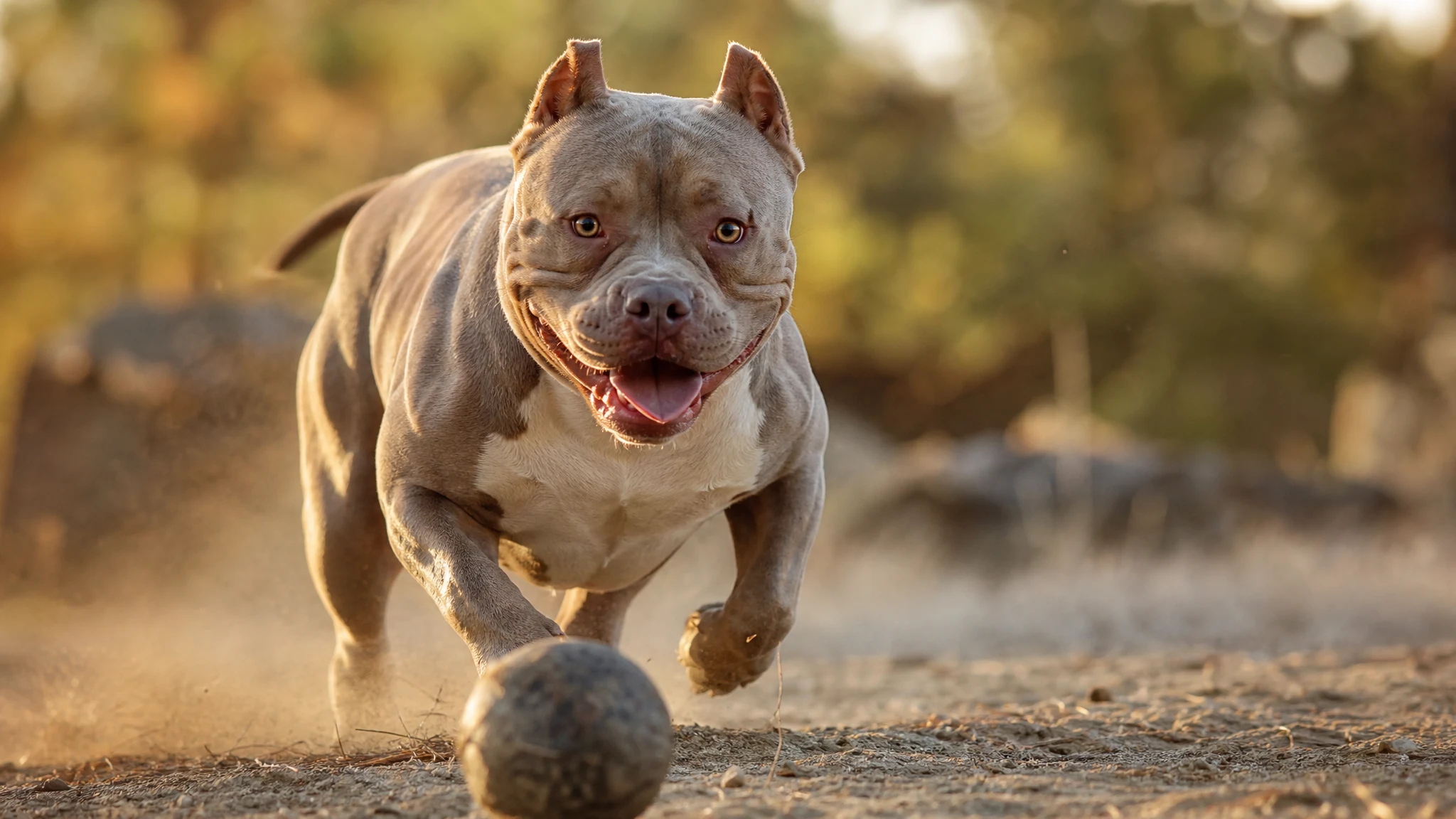
General training information. Every dog is an individual; for health or behavior concerns, see your veterinarian.
Most American Bullies were never bred to herd, hunt or guard. They were bred to be companions. That shapes what a "job" looks like for this breed, and it is good news for owners who want a dog that fits real life.
This guide shows you how to give your American Bully structured work, how to try a performance sport, and how to avoid the mistakes that make strong, willing dogs frustrated or hurt. Every dog is an individual, so treat the steps as a starting plan, not a promise.
What the breed was built for
The United Kennel Club (UKC) breed standard lists the American Bully in its Companion Dog Group. It says the breed was developed in the United States as an extension of the American Pit Bull Terrier, and that its original purpose was as a companion dog.
The UKC standard describes a gentle and friendly demeanor. It calls aggression toward humans uncharacteristic and highly undesirable. The American Bully Kennel Club (ABKC) standard describes a confident, willing-to-please dog, and also says human or dog aggression is uncharacteristic.
The UKC standard also says the ideal American Bully has the athleticism for performance events. So the breed's "working" side is about channeling a strong, athletic body and an eager attitude into structured activities. It is not about a historic livestock or guarding job.
One more point for accuracy: the American Bully is not recognized by the American Kennel Club. It is recognized by the UKC, which recognized the breed on July 15, 2013, and by the ABKC. If you are looking for events, start with those two organizations.
American Bully sports: what is actually documented
Here is the honest picture. The UKC says its performance events, such as weight pull, are open to UKC-registered dogs. The pages for the breed do not name the American Bully in a specific event. That means you should not assume a given sport accepts your dog until you check.
Before you invest in training for any sport, ask the organizer or the registry these questions:
- Is my dog's registration type accepted for this event?
- Is there a minimum age, and are there rules about the dog's size variety (Pocket, Standard, Classic or XL)?
- What equipment and surfaces are used, and can I watch an event first?
For the current event list and entry rules, check with the United Kennel Club and the American Bully Kennel Club directly. Local clubs and training facilities in your area may also run fun matches or beginner classes. Ask what they accept, and always watch a class before you sign up.
What you will need
- Small, soft treats your dog loves, plus a few higher-value ones for hard moments.
- A well-fitted flat collar or a comfortable harness, and a standard leash. Reward-based work does not need pain or pressure tools.
- A mat or rug for settling practice.
- Fresh water and a shady spot. The compact, muscular build can struggle in heat, according to Petful.
- A calm training space with few distractions to begin with.
- A veterinarian's go-ahead before you begin any new athletic activity.
Step-by-step: building a working foundation
Petful's training notes for the breed suggest starting with leash skills, recall, leave it, drop and mat settling. Those are the same skills almost every sport and job rests on. The steps below follow that order.
Step 1: Get a vet check first
Book a visit before you ask your dog for anything athletic. Ask your veterinarian whether your dog's joints, weight, breathing and general condition are ready for the activity you have in mind. Health questions, including any limping, noisy breathing or skin problems, belong with your vet, not with a training article.
This matters most for puppies. Petful notes that puppies need age-appropriate movement, not adult conditioning. Steady development is safer than rushing a young dog into jumping, pulling or long runs.
Step 2: Teach a relaxed mat settle
It sounds like the opposite of a sport, but it is the skill that makes everything else easier. Reward your dog for stepping onto the mat, then for lying down, then for staying there a little longer each session.
Start with a few seconds and build slowly. A dog who can switch off between turns is far easier to handle at a class or event.
Step 3: Build leash manners
Strength matters here. Even friendly play can be powerful in a dog this solid, which Petful lists among the breed's known challenges. Reward your dog every time the leash is loose, and stop moving when it tightens.
Practice in short sessions in low-distraction places, then slowly add more. Our complete American Bully training guide covers the basics in more depth.
Step 4: Teach a reliable recall
Use a happy voice and your best treats. Call your dog from a short distance, reward generously, and release them to go play again. Never call your dog to end the fun every time, or the word will lose its value.
Practice on a long line in open spaces. Do not trust recall off leash in unfenced areas until it is solid, and be aware that many places require leashes anyway.
Step 5: Add "leave it" and "drop"
These two cues are safety skills and sport skills. For "leave it," reward your dog for looking away from a treat in your closed hand. For "drop," trade a toy for a treat, then hand the toy right back so giving things up feels like a good deal.
Tug is a useful reward for many dogs, but only if the rules are clear. Pause the game if teeth touch your skin, and restart when your dog is calm.
Step 6: Build fitness slowly
Petful describes the breed's exercise needs as daily movement, sniffing, training and play, adjusted for age, joints, weather and breathing. It suggests two or more moderate walks at cooler times of day. PetsRadar puts the figure at around an hour daily.
Those are general guides, not targets for every dog. Add distance or effort in small steps, and stop at the first sign of tiredness, heat stress or soreness. Ask your vet if you are unsure.
Step 7: Try a sport-style activity in a safe, small way
Weight pull is the one UKC performance example the research turned up, and it is a good illustration of what to ask about. It has its own rules, equipment and safety requirements, and they are set by the organization that runs the event.
Contact the organizer, attend as a spectator, and ask about beginner guidance. Do not copy a heavy-pulling routine from a video and try it at home. Strength work done wrong can injure a dog's joints and back.
Step 8: Give everyday "jobs" a place in the routine
You do not need a trophy to give your dog meaningful work. A few ideas that follow from the skills above:
- Carry a lightweight toy on walks and hand it to you on cue.
- Do short sessions of nose work games, hiding treats around the room.
- Practice greeting visitors from the mat.
- Fetch the leash or a toy, then settle.
These keep your dog's mind busy and make the "working dog" idea part of ordinary life.
Tips for success
- Keep sessions short. Five to ten minutes of focused work beats a long, tiring session.
- Reward what you want. Petful's advice is to reward desired behavior and set up the environment to prevent practice of unwanted behavior. Use gates, leashes and closed doors to make good choices easy.
- Train in cool weather. Early mornings and evenings are kinder to a compact, muscular dog.
- Watch your dog's body. Heavy panting, slowing down, or refusing a task are signals to stop.
- Introduce other dogs carefully. Petful notes that how well American Bullies get along with other dogs varies widely. Use neutral introductions and watch closely, especially at classes.
- Keep the weight healthy. Petful warns that bulky-looking adults are often overfed. Count training treats as part of the daily food.
Common mistakes to avoid
- Skipping the foundation. Jumping straight to a sport without leash manners, recall and settle leads to a dog who is excited but not in control.
- Pushing a puppy too hard. Adult conditioning is not appropriate for a growing dog.
- Using harsh tools or corrections. The American Veterinary Society of Animal Behavior (AVSAB) supports reward-based training. Shock, prong and choke collars, alpha rolls and scruffing do not belong in a sport or job plan.
- Assuming an event accepts your dog. Confirm registration and size rules with the organizer first.
- Ignoring heat. A hot day can make even a short session unsafe.
- Forgetting housing rules. Petful lists uncertain housing permission as a known challenge. Check your lease, insurance and local rules before you commit to a bigger activity schedule.
What results to expect
With regular, positive practice, many owners find their dog becomes calmer on leash, more responsive to cues and more settled at home. A dog who has an outlet for energy and a clear routine may also be easier to live with.
How fast this happens depends on your dog's age, history, temperament and your consistency. Some dogs pick up a skill in days, and others need weeks or months. If your dog seems stuck, scared or unusually reactive, a qualified, reward-based trainer or your veterinarian can help you work out why.
Putting it together
The American Bully's "job" is first and foremost to be a companion, as the UKC standard states. Sports and structured tasks are a way to give a strong, willing dog something to do with that body and attitude. Start with the basics, check with the registries and local clubs about what events actually accept your dog, and move at a pace your dog's body can handle.
For a full overview of the early skills mentioned above, read our complete guide to training an American Bully.