Leash Training a American Bully: Pulling, Lunging and Loose-Leash Walking
General training information. Every dog is an individual; for health or behavior concerns, see your veterinarian.
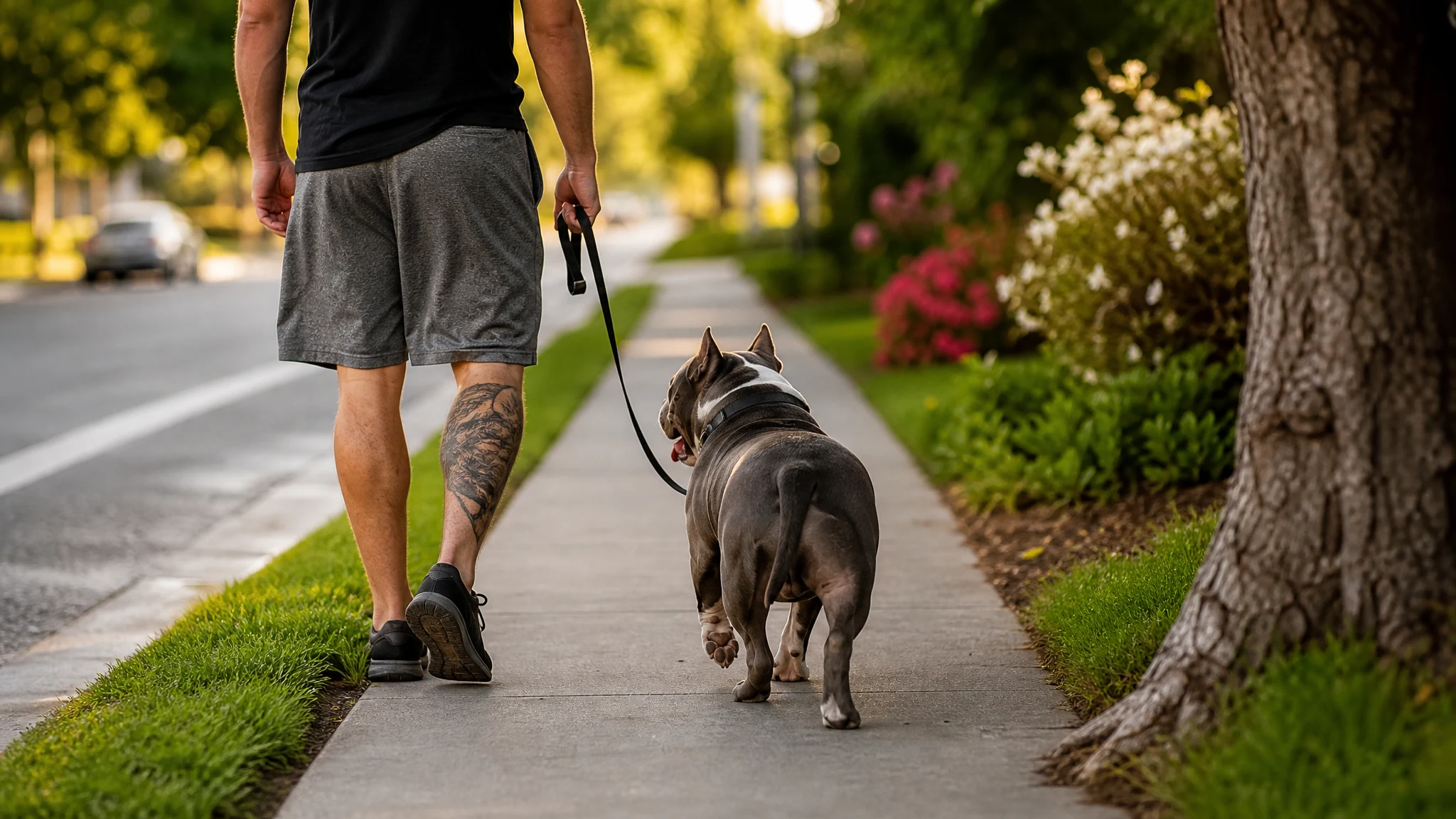
A friendly, muscular dog on a tight leash can turn a simple walk into a tug of war. American Bully leash training is mostly about teaching your dog that a slack leash is where the good things happen. It takes patience, a pocket full of treats and a plan.
This guide walks through the gear, a step-by-step method, fixes for lunging, and the mistakes that slow people down. For the bigger picture, see our complete guide to training an American Bully.
Why American Bullies Pull
Most dogs pull because pulling works. The dog leans forward, the human follows, and the dog reaches the smell, the squirrel or the other dog. Every successful tug teaches the dog to tug again.
Strength makes this matter more with this breed. Petful, a pet guide site, lists physical strength, even in friendly play, as a known challenge for American Bullies. A dog that is happy to see everyone can still drag you across a parking lot.
Temperament helps you here. The American Bully Kennel Club (ABKC) breed standard describes the breed as confident and willing to please. The United Kennel Club (UKC) standard describes a gentle and friendly demeanor. Those are club ideals, and individual dogs vary. A dog that wants to please is a dog you can pay for the right choices.
The sources we relied on do not rate this breed for energy or trainability, so we will not guess. Judge your own dog. Watch how fast it recovers from excitement and how long it can focus, and set your sessions to match.
Materials You Need
- A flat buckle collar or a well-fitted front-clip harness. Either one is fine for teaching. Use the harness if your dog's pulling strains its neck.
- A 4 to 6 foot standard leash. Choose a sturdy, comfortable grip. Skip retractable leashes while you are teaching, because they reward pulling by design.
- Small, soft treats. Pea-sized pieces your dog can swallow in a second. Have two or three kinds so you can raise the value near distractions.
- A treat pouch. It keeps rewards fast and your timing clean.
- A clicker or a marker word such as "yes." This is optional but useful.
- A quiet starting place. A hallway, a fenced yard or an empty driveway.
Gear to Avoid
Do not use prong collars, choke collars or shock collars. The American Veterinary Society of Animal Behavior (AVSAB) supports reward-based training, and pain-based tools can create fear and make reactivity worse. They also teach nothing about what you want the dog to do.
Step-by-Step: How to Leash Train an American Bully
Step 1: Get comfortable with the gear
Let your dog wear the collar or harness around the house. Pair it with treats. Clip the leash on and let it drag for a few minutes while you play or hand out rewards.
The goal is a dog that sees the leash and thinks "snacks." Skip this step and everything later gets harder.
Step 2: Teach your dog to check in
Stand still indoors. When your dog looks at you, mark the moment with "yes" and give a treat. Repeat until your dog is offering eye contact on its own.
Add a name or a cue like "look." Practice in short sessions of two to five minutes. Eye contact is the foundation of every loose-leash walk.
Step 3: Reward position at your side
Hold the leash in one hand and treats in the other. Pick a side and stay with it. When your dog is next to your leg with the leash hanging in a loose "J" shape, mark and treat right at your hip.
Reward often at first, nearly every step. Dogs learn where the payment is. Keep the treat low and near your leg so your dog stays close, not out in front.
Step 4: Take a few steps
Walk two or three steps. If the leash stays slack, mark and treat. Gradually stretch to five steps, then ten, then a full lap around the room.
Change direction often. Turn left, turn right, stop and start. A dog that must watch you cannot easily forge ahead.
Step 5: Make pulling stop working
The moment the leash goes tight, stop moving. Stand like a tree. Do not yank and do not scold.
When the leash slackens, even slightly, mark and treat. Then walk on. You can also turn and walk the other way, rewarding when your dog catches up. Your dog learns that tension stops the walk and slack keeps it going.
Be consistent. If you let your dog pull to the park every day, you are teaching it that pulling is the way to get there.
Step 6: Move outdoors in easy stages
Practice in your driveway or yard first, then the front sidewalk, then a quiet street. Each new place is like starting over, so raise your reward rate and lower your expectations when the environment gets harder.
Petful suggests starting with core skills such as leash manners, recall, leave it, drop and mat settling. Those skills support each other on every walk. Leave it in particular is handy when your dog spots something interesting on the ground.
Step 7: Add loose-leash games
Games keep sessions fun and help your dog think instead of lunge.
- Treat scatter: Toss a few treats on the ground, then walk on. Sniffing is a reward too.
- Red light, green light: Walk, stop, wait for your dog to stop or sit, then walk again.
- Sniff breaks as rewards: Say "go sniff" and release your dog to a good smelling spot when it walks nicely for a stretch.
- Pace changes: Speed up, slow down, then reward the dog for adjusting to you.
- U-turns: Say "this way," turn away, and reward your dog for following.
Step 8: Build duration and distractions
Once your dog does well on quiet streets, add a bit more challenge, one thing at a time. Try a busier block, a driveway with a bike, or a longer distance from home.
If your dog fails, you went too fast. Back up to an easier setting and rebuild.
Fixing Lunging at Triggers
Lunging at dogs, people, bikes or squirrels is a separate problem from everyday pulling. It often comes from excitement, frustration or fear. The behavior looks similar, but the fix depends on the cause.
Both the UKC and ABKC describe aggression toward people as uncharacteristic for the breed. Even so, a dog that lunges needs a calm, careful plan, and not every dog matches its breed standard. If your dog growls, snaps or you feel unsafe, talk to your veterinarian and ask for a referral to a qualified, reward-based behavior professional.
Step 1: Find your dog's threshold distance
Watch how close a trigger can get before your dog stiffens, stares or pulls. Stay farther away than that. Training happens below the threshold, not above it.
Step 2: Mark and reward calm looks
When your dog notices the trigger and then looks at you or stays loose, mark and treat. You are paying for noticing without exploding.
Step 3: Create space early
Cross the street, turn into a driveway, or step behind a parked car. Move before your dog is tense. Early exits are a normal part of good handling, not a failure.
Step 4: Handle dog-to-dog meetings carefully
Petful notes that how American Bullies get along with other dogs varies widely and recommends neutral introductions and close observation. Skip leash greetings with unknown dogs while you are teaching. Tight leashes can make greetings tense for both dogs.
Parallel walking at a distance is a gentler way to build good associations. Keep the walk moving and reward your dog for staying relaxed.
Step 5: Use your environment
Petful also advises setting up the environment to prevent practice of unwanted behavior. Walk at quieter hours, choose wide streets, and avoid known hot spots until your dog is ready. Every lunge your dog rehearses makes the habit stronger, so prevention counts as training.
Tips for Better Walks
- Exercise before training. A short play session or sniff walk first can take the edge off. Petful describes two or more moderate walks a day, and PetsRadar says around an hour of daily activity. Adjust for your dog's age, joints and breathing.
- Walk in cooler hours. Petful warns that the compact, muscular build can struggle in heat. Early morning and evening are better. If your dog is panting hard or struggling to breathe, stop and call your veterinarian.
- Keep sessions short. Five good minutes beat twenty frustrating ones.
- Use higher value treats outside. Cheese or cooked chicken in tiny pieces can beat kibble near distractions. Count treats as part of the daily food so your dog does not gain extra weight. Petful flags overfeeding of bulky-looking adults as a known challenge.
- Be the interesting one. Talk, change pace, and reward attention.
- Use a front-clip harness for control. It can turn a pulling dog toward you instead of letting it drive forward. It is a management tool, so keep rewarding the behavior you want.
- Keep puppy walks gentle. Petful notes that puppies need age-appropriate movement and not adult conditioning. Short, frequent outings with lots of rewards suit growing joints better than long forced marches.
Common Mistakes to Avoid
- Jerking the leash. Corrections add tension and can hurt your dog. They also teach it to brace against you.
- Using pain-based tools. Prong, choke and shock collars are not part of humane training and are not recommended by AVSAB-aligned trainers.
- Letting your dog pull some of the time. Mixed rules teach persistence. Decide what you will accept and stick to it.
- Moving too fast to hard places. If you go straight to a crowded park, you are testing your dog, not training it.
- Skipping rewards once the dog improves. Fade treats slowly and keep paying for good walks with sniffs, praise and the occasional snack.
- Reprimanding fear or excitement. Scolding adds stress. Create distance and reward calm choices instead.
- Training when you are tense. Dogs notice. Take a breath and keep the leash relaxed in your hand.
What Results to Expect
Progress varies by dog, age, history and how often you practice. Many owners see calmer walking within a few weeks of daily short sessions, but results are not guaranteed and some dogs take months. Adolescent dogs often regress, so expect some ups and downs.
Indoors, you might see your dog begin to check in and follow you around within days. Outdoors, quiet streets usually come first. Busy areas and strong triggers take longer.
If you are stuck, record a short video of your walks and look for patterns. Are you moving too fast, rewarding too little, or walking in the wrong places? Small changes often help.
When to Get Extra Help
Talk to your veterinarian if your dog suddenly pulls or lunges more than before, seems painful, or has trouble with heat or breathing. Health problems can change behavior. Your vet can also refer you to a qualified, reward-based trainer or behavior professional if lunging feels unsafe.
Check with your local landlord, city or county about leash rules and breed-related housing restrictions, since Petful notes that housing permission is uncertain for some owners. We do not have local rules for your area, so confirm them with the agency or property manager.
Final Thoughts
A strong, eager dog is a joy once the leash goes slack. Teach the basics at home, reward the walk you want, and avoid trouble spots until your dog is ready. Be steady, be kind and keep sessions short.
For the full training picture, from house manners to recall, read our complete American Bully training guide.